Cognitive Distortions: When Our Thoughts Bend Reality
This article is part of the [Core Convictions series] Core Convictions: How You Answer These 6 Questions Will Change How You Live Your Life — six questions that reveal how our beliefs shape the way we live. This is part two of the question, “What do we trust to define reality"?”
You’re lying in bed at the end of the day, phone in hand, replaying everything that went wrong. The email you forgot to answer. The awkward comment in that meeting. The text you sent that never got a reply. Somewhere between a sigh and a shrug, the thought slips in: “Nothing ever goes right for me.”
You don’t decide to think this way. It just shows up—especially when you’re tired, stressed, or already carrying that quiet suspicion that you’re behind, disappointing someone, or not where you “should” be by now. Maybe you grew up feeling like you could never quite measure up. Maybe every time you got your hopes up, something fell through. After enough of those moments, your brain starts connecting the dots into a single, heavy story: “This is just how my life goes.”
If that sounds familiar, this part of the Core Convictions series is for you.
In the last article, “What Do You Trust to Define Reality?”, we asked big questions about the theology you actually live from: What do I trust to define who I am and what is real? Those questions pull the curtain back on your “inner operating system”—the beliefs, vows, and assumptions that run in the background. This article zooms in on one piece of that system: the way your automatic thoughts and self‑talk can quietly bend reality, often without you noticing, and how you can begin to retrain them in the light of a truer story.
Honesty vs. Truth
Cognitive distortions are habitual errors in thinking—patterns that tilt your view of yourself, others, and the world, usually in a negative direction. They’re not just random negative thoughts. They’re grooves in your mind. Once you’re in the groove, it can be hard to notice that you’re not on level ground.
Take emotional reasoning: “I feel like a bad friend, so I must be a bad friend.” The feeling is real and deserves compassion. But it isn’t the same as a verdict on your character.
This is where it helps to separate two ideas:
Honesty: “This is genuinely how it looks and feels to me right now.”
Truth: “This is what’s actually real when I step back and look at the fuller picture.”
Honesty is about owning your experience. Truth is about checking that experience against reality.
The goal is not to shame yourself for feeling what you feel. The goal is to be able to say, “This is honestly how I feel—but my feelings and thoughts are not the same thing as reality.”
Common Cognitive Distortions
Most of us recognize ourselves in more than one distortion. That’s part of being human, not proof that you’re broken.

All‑or‑Nothing Thinking
How it works: You see only two options—success or failure, perfect or worthless, black or white. There’s no room for “good enough” or “in progress or learning.”
Example: “I made one mistake in that presentation. It was a disaster. I’m stupid. I’m terrible at my job.”

Mental Filtering
How it works: One hard moment cancels out everything else; the day gets reduced to its worst thirty seconds.
Example: “All I can think about from today is that one awkward comment,” despite several kind interactions.

Overgeneralization
How it works: One hard moment turns into a sweeping rule about you or your life. Our judgments that may have been true about some people are seen as a general truth.
Example: “They didn’t text back. People always end up losing interest in me.”

Magnification / Minimization
Magnification / Minimization
How it works: You distort perspective by exaggerating the significance of problems or minimizing the importance of strengths or achievements.
Example: “I made a small mistake—what a disaster,” or “That success doesn’t really matter.”
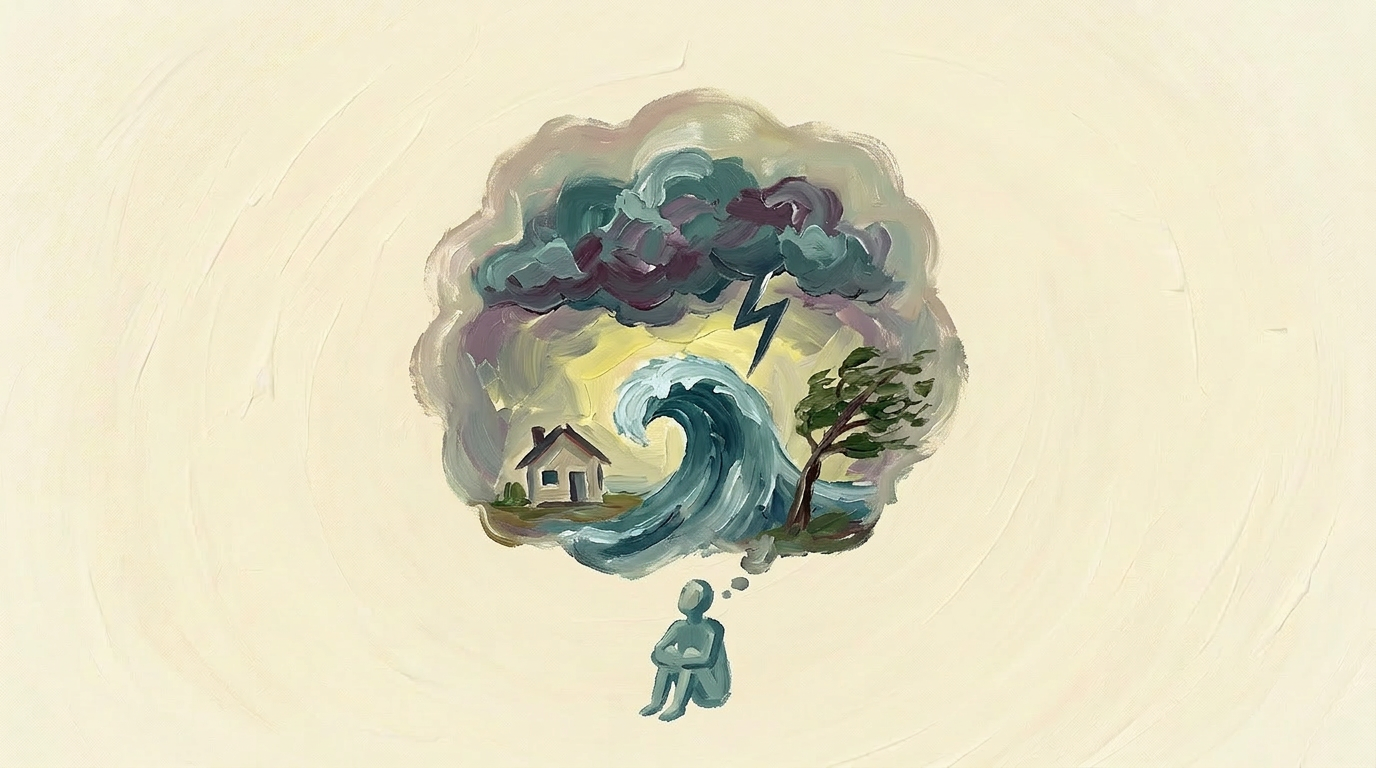
Catastrophizing
How it works: You imagine the worst possible outcome and believe it’s likely to happen.
Example: “I failed (or might fail) the test; I’ll fail school, never get a job, and end up homeless” “My friend canceled our plans; they must not like me anymore, and I’m going to end up alone.”
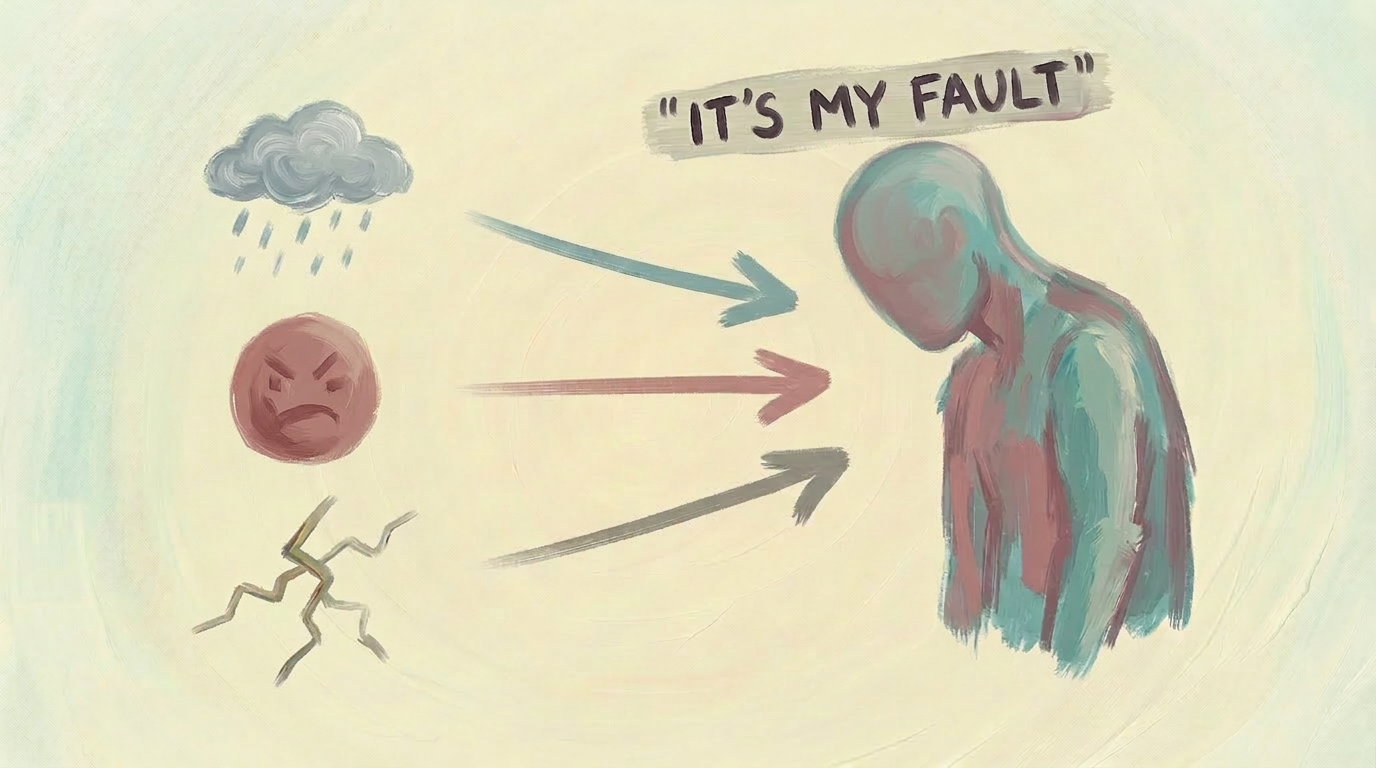
Personalization (It’s About Me)
How it works: You assume excessive responsibility for events beyond your control, believing other people’s moods or problems must be your fault. Assuming most things are about you.
Example: “My spouse seems upset. I must have said something wrong.”
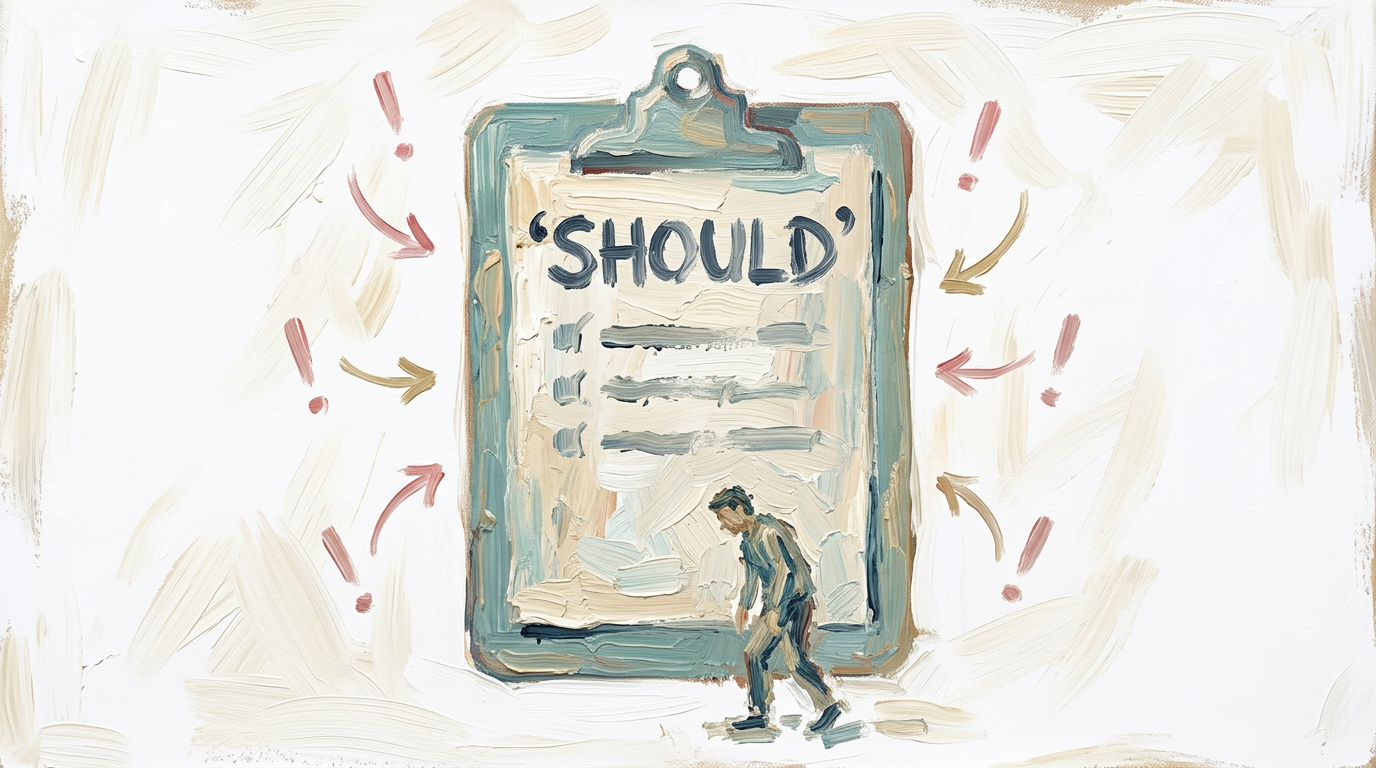
“Should” Statements
How it works: You live under heavy rules about how you and others must be.
Examples: “I should always be calm and put‑together. I should never feel anxious.” “You should always know what I need without me having to say it.”

Emotional Reasoning
How it works: Feelings become your proof—if you feel it, it must be true.
Example: “I feel like a bad friend, so I must be a bad friend.” “I feel stupid, so I must be stupid.” “I feel depressed, so my life must be meaningless.”

Jumping To Conclusions
How it works: You form a quick judgment without evidence, filling in gaps with assumptions instead of facts.
Examples: “My friend didn’t invite me this time; I guess I’m not really wanted in that group.” “I had a tone with my kids —I’m clearly failing as a parent.”
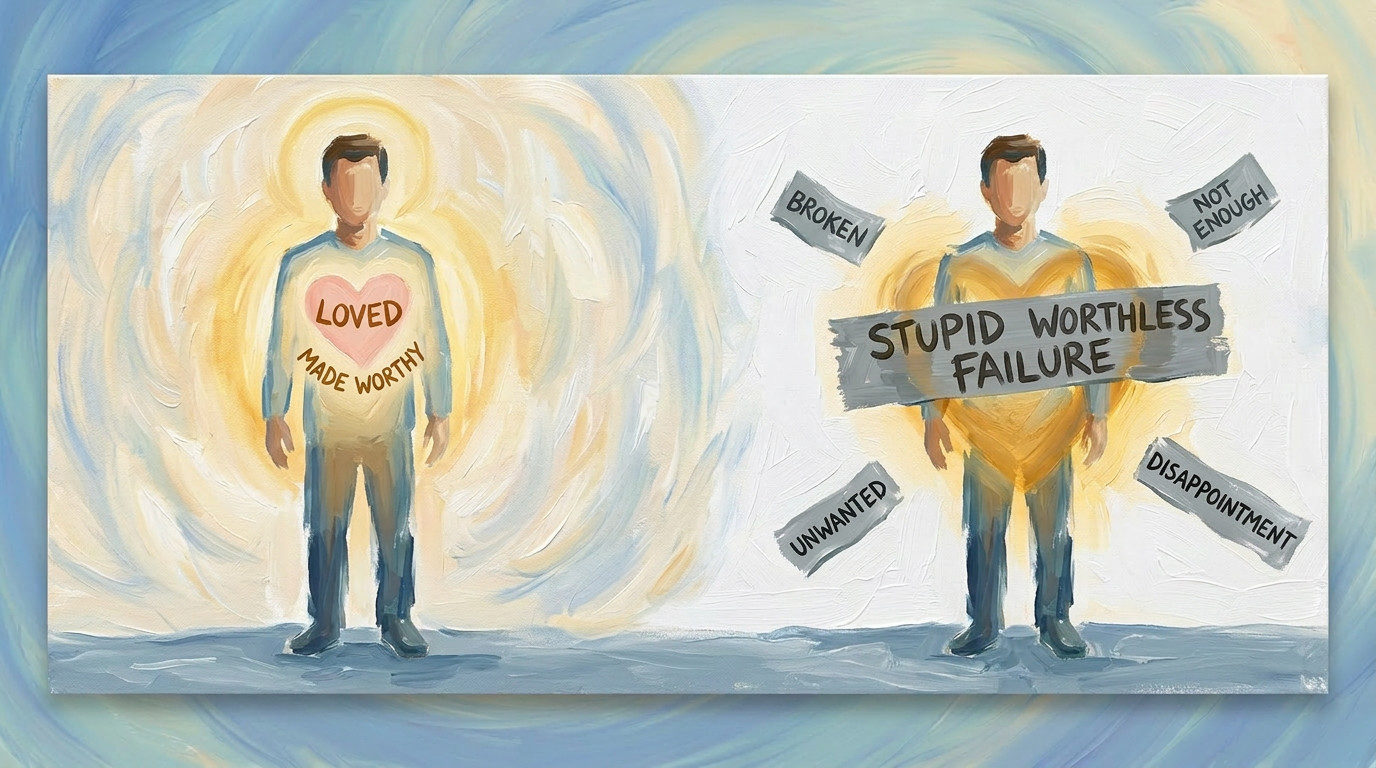
Labeling
How it works: You take one mistake or trait and turn it into a sweeping negative name for yourself or someone else (“I am…” / “They are…”), instead of seeing it as a specific behavior.
Example: “I messed up that conversation. I’m such a loser.” “I made a mistake. I’m a failure.”

Limiting beliefs
How it works: You accept fixed, negative conclusions about yourself, others, or your future (“this is just how it is”) that shut down hope, effort, and change at the first sign of difficulty or before you even begin.
Examples: “I knew I would fail before I started, I might as well give up.” “That’s just the way I am. People can’t really change. Things will never get better.”
Each of these takes a real moment—an email, a silence, a mistake—and turns it into a rigid story, usually about who you are or how life always goes. Your mind’s “filter” then keeps feeding that story by noticing more of what seems to prove it and less of what doesn’t. For more on how our self‑talk and personal narratives shape us, you can read that article in this series.
Where Distortions Come From
We don’t wake up one day and decide, “I’m going to start believing lies about myself.” Distortions grow out of what we’ve lived through.
They’re shaped by:
Family patterns and unspoken rules
Cultural messages about worth, success, and identity
Past experiences of rejection, criticism, or trauma
The conclusions we drew as kids to survive hard situations
Over time, we form core beliefs, such as:
“I’m not good enough.”
“People can’t be trusted.”
“The world isn’t safe.”
“Things will never change.”
Cognitive distortions often sit on top of these beliefs. In that sense, they’re maladaptive coping mechanisms—ways of thinking that once seemed to protect us.
For example:
A child in a highly critical home may learn to say, “I’m bad,” instead of noticing, “I’m being treated unfairly.” Blaming themselves can feel safer than facing how unsafe the adults are.
Black‑and‑white thinking (“They’re all bad,” “I’m all good”) simplifies a chaotic environment and makes it feel more predictable.
Always assuming, “It’s my fault,” can feel more controllable than, “I’m helpless.”
If our core beliefs are the galaxies then and cognitive distortions are the light that bends around them. They are the thoughts and feelings that are in tune with our old hurts, habits, and patterns. A neutral text feels like rejection. One awkward moment outweighs ten kind ones. A single mistake becomes proof that you’re “no good at anything.” Your experience feels honest, but the gravity of the distortion is quietly warping what you see.
These patterns were trying to help you make sense of confusing or painful situations. But over time they harden. What began as protection slowly turns into prison.

Why the Brain Clings to Them
Your brain loves efficiency. It uses shortcuts from past experience to interpret new situations quickly.
If expecting the worst once helped you feel prepared, your brain remembers that.
If blaming yourself felt safer than depending on unpredictable people, your brain remembers that too.
If reading silence as “They probably hate me” seemed to protect you from surprise rejection, that pattern gets stored.
Over time, these shortcuts become default settings. They stop feeling like guesses and start feeling like facts. You don’t experience them as options; you experience them as reality.
To understand why they’re so sticky, it helps to look at a small but powerful system in your brain that acts like a filter.
The Reticular Activating System: Your Brain’s Filter
Underneath all of this is a small but powerful system in your brainstem called the Reticular Activating System (RAS). It helps regulate wakefulness and attention by acting as a filter for the constant stream of information coming at you all day long.
You’ve felt this filter at work when you hear your name in a noisy room, or when you start thinking about a certain kind of car and suddenly notice it everywhere. Out of all the sounds, sights, and details around you, the RAS helps determine what rises to the surface and what fades into the background.
Here’s the important part for distortions: the RAS is strongly influenced by what you already believe and fear. If your inner story sounds like “I’m a failure,” “People will hurt me,” or “The world isn’t safe,” your attention will naturally lock onto anything that seems to confirm those beliefs and quietly overlook much of what doesn’t.
That’s part of why distorted thoughts can feel so convincing: your brain isn’t showing you everything; it’s showing you what it has learned to treat as most important.
When Distortions Start Shaping Your Life
When distortions go unchallenged, they don’t just describe your life; they can quietly shape it.
You wake up thinking, “This day is going to be terrible; I just know it.” You brace yourself, notice every inconvenience, interpret neutral comments negatively, miss small good moments. By bedtime, the day feels exactly as bad as you predicted.
You’re sure, “I blew that meeting. I’m no good at my job.” You feel defeated, pull back, stop offering ideas. Over time your work really does suffer—and your belief feels confirmed.
You think, “I’m terrible at relationships,” so you avoid vulnerability or end things quickly. Years later, the lack of deep connection seems to prove the original story true.
In close relationships:
Fear of abandonment leads to constant testing and suspicion. The relationship grows tense. The closeness you want starts to crack.
“I’m unlovable” leads you to push people away or leave before they can leave you. Connection becomes harder to keep.
“This relationship will fail” leads you to stop trying—and the relationship slowly collapses.
Just because a thought feels honest and seems to predict your experience does not mean it was true. It means belief is powerful.
A Simple Exercise: Spot Your Patterns
You don’t have to guess which distortions you use. You can observe them.
Try this:
Read through the list above.
Circle or jot down the 3–5 that feel most like your inner voice.
Notice where each one shows up: self‑talk, relationships, work, faith.
Most people see several at once. That’s normal. Naming them is not an admission of failure; it’s an act of clarity.
If you’re in a group or working with someone:
Take turns sharing which patterns you recognize.
Normalize it: everyone has distortions.
Pick one or two to focus on first. You don’t have to tackle everything at once.
Now What? A Simple Way to Respond
Noticing distortions is helpful, but change comes as we respond to them with self‑awareness and surrender. Here’s a simple path, drawn from the 6 S’s and the D.I.C.E. method of CBT.
Stop — Create space
When you catch a heavy, distortion‑shaped thought (“Nothing ever goes right for me,” “I’m a failure,” “They probably hate me”), pause. Take one slow breath and mentally hit “pause” on whatever you’re doing. Busyness and avoidance keep us from this work; there is no self‑awareness without these small moments of stillness.See — Let it “show up”
Put the thought into words: “I’m having the thought that…” and let it come into view. Ask, “What am I actually telling myself right now?” Like turning on a light in a dark room, you’re letting what’s been in the shadows come into view so it can be worked with instead of just silently driving you.Sit With It — In God’s presence
Briefly name the feeling underneath—fear, shame, sadness, anger—and sit with it before God: “Lord, this is honestly how it feels right now.” Instead of rushing to fix, numb, or explain it away, you give it a little time and compassion. Some parts of your inner life need to be “hovered over” rather than hurried past.Sort It Out — Using DICE
Now you sort what’s going on using the DICE grid:D – Data: What actually happened (just the facts)?
I – Interpretation: What story am I telling myself about those facts?
C – Conclusions: What big conclusion am I jumping to about me, others, or God?
E – Evidence: What evidence suggests a different, more truthful conclusion could fit better?
This is where you begin to separate light from darkness in your thinking—what’s really there from what your distortion is adding on top. (For a fuller walk‑through, see The D.I.C.E. Method of CBT: Taking Our Thoughts Captive.)
Say It — Name and speak it
Name the distortion out loud or on paper: “That’s all‑or‑nothing thinking,” “That’s mind‑reading,” “That’s labeling.” Then speak a more truthful, grounded thought: “Here’s what actually happened… here’s what I really know… here’s what I don’t know.” Naming (qara) turns vague emotion into something you can test, grieve, correct, or align with God’s heart.Surrender It — Back to God
Finally, take the thought, the feeling, and even your best new conclusion and hand them to God as Creator and Sustainer: “I surrender this to You. Search me and know my anxious thoughts. Show me what is true, and lead me in the way everlasting.” Awareness without surrender keeps you circling your own story; awareness surrendered to God lets His story, not your distortion, define reality.
You don’t have to run every thought through all six steps every time. But even choosing one familiar distortion and walking it through Stop, See, Sit With It, Sort It Out, Say It, and Surrender It can begin to loosen its grip. For a fuller look at these six movements, you can read “6 Practical Steps to Becoming Self Aware”.
Trusting Reality More Than the Distortion
We’re back to the core question: What will you trust to define reality?
Your feelings and experiences matter. But when your inner narrator is shaped by fear, shame, or old wounds, it can sound certain while quietly bending the truth. Distorted thoughts love to pose as honesty even as they exaggerate, predict, label, and overgeneralize.
You don’t have to pretend those thoughts aren’t there—and you don’t have to give them the final word. When you stop, see, sit with, sort out, say, and surrender your thoughts, you’re doing something deeply spiritual: bringing your inner world into the light of God’s presence and saying, “Lord, I want Your mind, not just mine. Your story, not just my story.”
A Prayer
If it helps, you can turn this into a simple prayer:
Lord, I confess that I have often trusted my distorted thoughts to define what is real and what I am worth. I bring You the stories I tell myself—“Nothing ever goes right for me,” “I’m a failure,” “People will always leave,” “Things will never change.” Show me where a lie has been sitting at the center. Teach me to notice my thoughts, to sit with my feelings in Your presence, and to sort out what is true from what is fear or shame. Retrain my inner filter so I see more of what You see—signs of Your faithfulness, the image of God in me and others, the small but real ways You are at work. Give me courage to take one small step of trust today, even if it feels new or risky. Be the One who names me, and the truest definition of reality in my life. In Jesus’ name, amen.
You don’t have to untangle every distortion in one sitting. But you can start by bringing one real, familiar thought into the light and refusing to let it quietly run the show.
This Is Part of the Core Convictions Series
This article is part of the Core Convictions series—six questions that reveal how our beliefs shape the way we live:
What story am I living in? (see also Self Talk, Our Personal Narratives of Life)
What commitments have I made—inner vows and declarations? (see also The Power of Declarations: A New Allegiance and Inner Vows: How “Never Again” Promises Keep You Stuck (and How God Heals Them))
What core beliefs do I have about myself, God, and others? (see also Theology of the Heart: Our Lived Out Beliefs)
What judgments have I formed?
What habits and assumptions shape me?
Here we focused on how our patterns of thought—our distortions and filters—intersect with those deeper core beliefs and habits, alongside related ideas in 6 Practical Steps to Becoming Self Aware and The D.I.C.E. Method of CBT: Taking Our Thoughts Captive.
Ready to Go Deeper?
If these questions are stirring something in you, you don’t have to work through them alone. As a Christian counselor, I walk alongside people who are ready to examine the stories, beliefs, and thought patterns at the center—and do the slow, real work of exchange.
Schedule a free 15-minute consultation to explore whether counseling might be a good fit for you. Learning to catch these distortions is at the heart of Christian counseling for anxiety.
You can also reach us at growthcounseling.org/contact, by phone at (484) 854-3626, or by email at info@growthcounseling.org.