What Story Am I Living In?
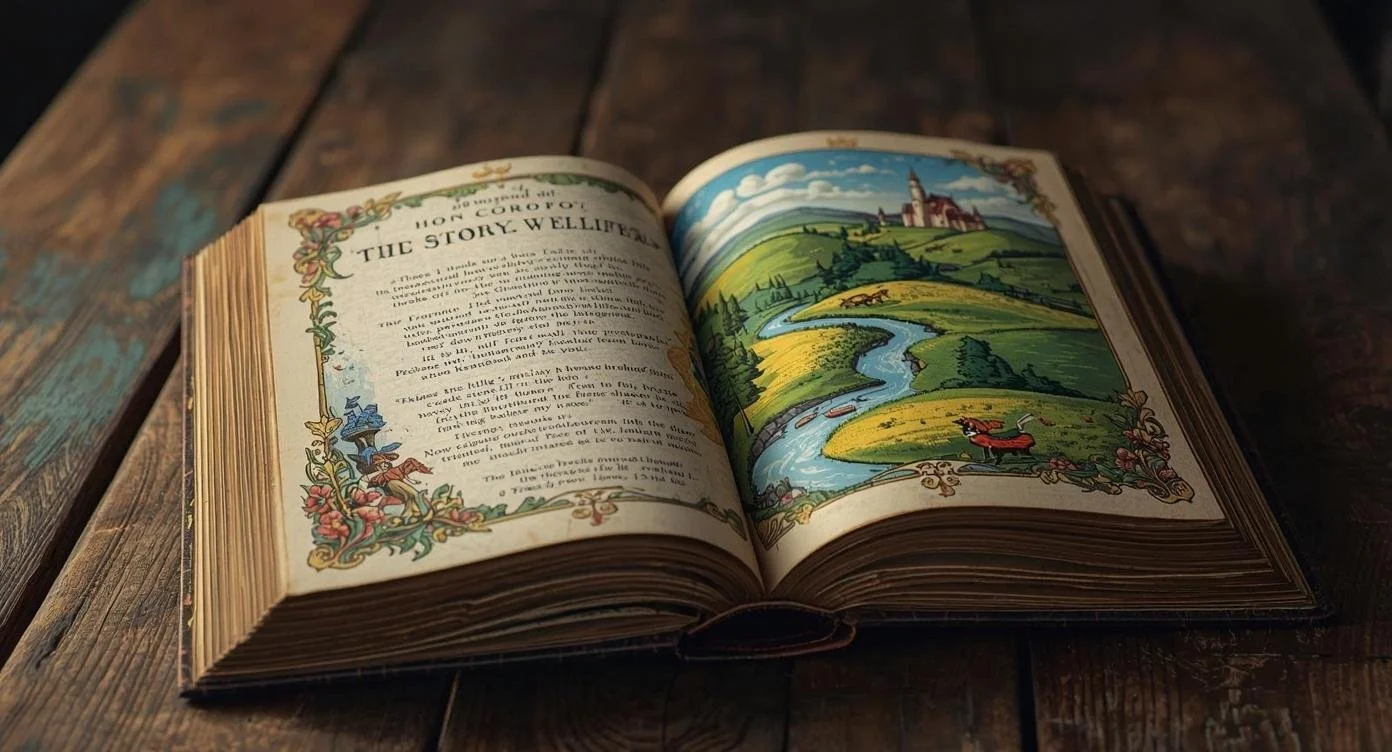
Have you ever opened a book to the middle and tried to make sense of what was happening? It’s almost impossible. You don’t know who the characters are, what they’re striving for, or why their choices matter.
Context matters. Meaning requires story.
The same is true of life. We can only understand who we are—and what we’re doing here—when we see our part within a larger narrative.
Every person lives out of their core convictions, whether they realize it or not. Those convictions shape how we see God, ourselves, and others. They often run beneath the surface, quietly steering our decisions and reactions.
In my article Core Convictions: How You Answer These 6 Questions Will Change How You Live Your Life, I introduced six key questions that reveal what really governs us.
The first—and perhaps the most foundational—is this one:
The Power of Meta‑Narrative
Every human being lives under a meta‑narrative—a “big picture story” that explains who we are, what to trust, what’s real, and why life matters. It’s the lens we use to interpret everything.
“Why is this happening?” and “What should I do?” are questions that can only be answered in the context of a bigger story.
We don’t always choose it consciously, but we always live out of one.
The Reactive Story
Life is mostly something that happens to me.
In this narrative, my energy goes into managing, controlling, or pleasing others just to stay safe. People quickly get sorted into black‑and‑white categories: good guys vs. bad guys, us vs. them, heroes vs. villains, victims vs. persecutors.
With every show I binge, TikTok I scroll, or YouTube clip I watch, my heart quietly lands on a conclusion about how the world works. I’m constantly absorbing other people’s scripts about success, identity, and worth.
Over time, my inner life becomes a patchwork of borrowed and conflicting convictions—fragmented stories stitched together. Instead of stepping back to see the bigger picture and how it all fits together, I stay in reaction mode, responding to whatever is happening in the moment.
The Self‑Centered Story
I’m the hero of my own script.
Everything revolves around my goals, achievements, and feelings. This story usually leads to:
Performance anxiety – my story is as big as it gets.
Transactional love – what’s in it for me?
Self‑deception – I trust my own experience over anything else.
Rivalry – the only way to know if I’m okay is by comparing myself to others.
The Meaningless Story
There might be some bigger story out there, but it doesn’t really make sense.
Everything feels subjective and up for grabs—no solid truths, just “whatever works for you right now.” Big systems mostly seem like tools to control people, so you trust your gut and your circle of friends instead.
You’ve been taught to question everything. Freedom is found in keeping all options open, even if that freedom quietly starts to feel empty and directionless.
Recent research reflects this drift:
A 2023 Harvard Graduate School of Education report found that 58% of young adults (ages 18–25) reported lacking “meaning or purpose.”
A YouGov study (2021) found that 30% of Britons aged 16–39 see no meaning in life—nearly 9 in 10 report that their life lacks purpose.
Each of these narratives produces a lens—and that lens shapes our entire experience of life.
The real question is not do I have a story, but which story do I trust?

Narrative Warfare: The First Weapon Against God
J.R.R. Tolkien offers an artistic rendition of the biblical creation story in The Silmarillion. Eru Ilúvatar, the God‑figure, creates His children out of a desire to bring life, love, and beauty into existence.
However, Melkor—the Satan‑like figure—introduces discord into the heavenly song. In pride, he sees himself as equal to or greater than the Creator and decides that things would be better if he did what was right in his own eyes. He weaves a competing melody into the song, trying to originate life and satisfaction apart from the Creator.
In many ways, this mirrors humanity’s first false narrative. In Genesis, the serpent asks, “Did God really say, ‘You must not eat from any tree in the garden’?”—casting doubt on God’s goodness and generosity. Then comes the lie: “You will be like God.”
The invitation is clear: step out of God’s story and become the god of your own.
The results of Adam and Eve believing that false story are unmistakable—fear, hiding, blame, and distance from God. Humanity starts moving to the rhythm of its own song and slowly loses touch with the music of the Father.
The Cost of Living from a False Story
Self‑Fulfilling Prophecies — We act out the lies we believe.
Assumptions of failure or rejection generate the very results we fear.Distorted Perception — False stories warp how we see the world.
The Reticular Activating System (RAS) over‑notices threats and overlooks grace.Fragmentation — We know biblical truth in theory but live from fear or shame in practice.
That inner split leads to emotional numbing and pseudo‑identities.Relational Breakdown — Stories rooted in defensiveness or rivalry corrode intimacy.
They create “dances of disconnect”—blame, withdrawal, or comparison—that make love unsafe.Loss of Meaning — Our lives by themselves are fleeting and finite.
Without a redemptive meta‑narrative, life shrinks into self‑centeredness and survival mode.
False stories don’t just mislead—they deform us.
✝︎ The Story of God
There is a story big enough to hold every other story. It begins with God.
God created the world good, and people very good. Every person you meet bears His image. We were designed for harmony and joy, yet humanity believed a rival story: that life apart from the Creator would bring freedom.
That lie became our “truth,” and the world fractured. We stepped out of God’s story and tried to write our own.
But God entered His own story. In Jesus Christ, the Author stepped onto the page to redeem what was lost. Through Him, creation begins anew: forgiveness replaces shame, belonging replaces fear, and wholeness replaces fragmentation.
“In him we have redemption through his blood, the forgiveness of sins, in accordance with the riches of God’s grace” (Ephesians 1:7).
Creation – Fall – Redemption – Restoration. This is the true meta‑narrative. It gives meaning to pain, context to purpose, and hope to everything in between.
🪞 Pause and Reflect
What story has quietly shaped how I see God, myself, and others?
Where have I believed a “lie that became the truth”?
How is God inviting me to release that false narrative and live in His redemptive one?
When we anchor our lives in the story of God, false stories lose their power.
Anxiety gives way to peace. Striving gives way to rest. Life regains proportion and meaning.
You are not the author of chaos—you’re a character in a story written by a faithful and loving Creator.
In His hands, even the painful chapters lead toward renewal.
✦ The Core Convictions Series
This article is part of the Core Convictions series: six questions that reveal how our beliefs shape the way we live.
What story am I living in?
What commitments have I made?
What do I believe about myself, God, and others?
What judgments have I formed?
What habits and assumptions shape me?
What do I trust to define reality?
Read the full series here.
Your life has a larger context waiting to be discovered.
Which step will you take today?If you notice certain stories about who you are keep showing up—in your relationships, your faith, or your emotions—you do not have to sort through them alone. Walking with a trusted counselor can help you name the narrative you have been living in, discern where it came from, and begin to rewrite it in light of truth, grace, and hope.
You are welcome to schedule a free 15-minute consultation to explore how counseling could support you as you work with your meta-narrative and the story you believe about yourself. To get started, you can:
Schedule a free 15-minute consultation here: growthcounseling.org/contact (choose a time that works for you).
Email us at info@growthcounseling.org with questions or to request an appointment time.
Call or text our office at (484) 854-3626 to connect and explore next steps.