The Power of Declarations: A New Allegiance
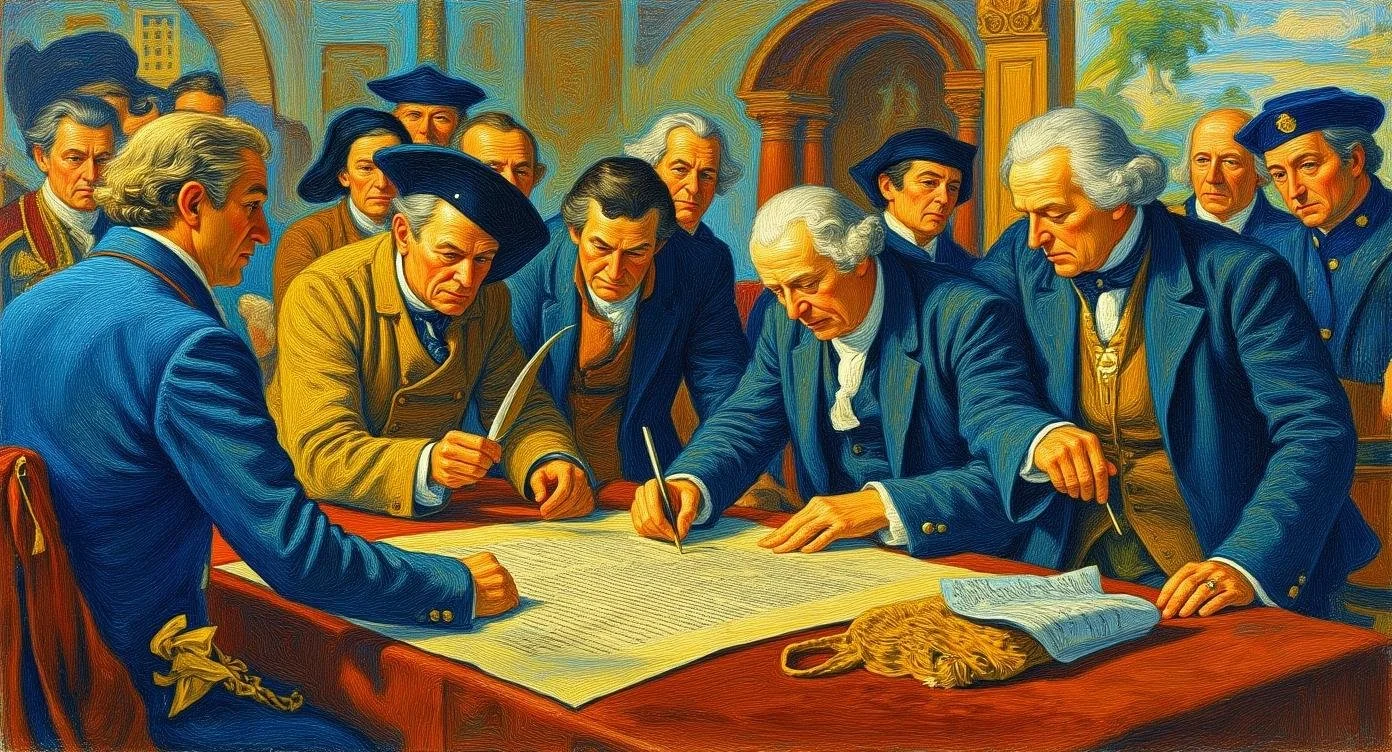
Just a Bunch of Old Guys in a Room?
When the founders of a new nation put ink to parchment on a July afternoon in 1776, it might have looked like “just ink on paper.” Words on a page. A document that could be minimized, dismissed, or mocked as idealistic. And yet something very real happened in that moment—an unseen transfer of allegiance that could not be undone.
It wasn’t primarily a military act; it was an act of will, a change of allegiance.An outward declaration of an inward heart stance that said: We no longer define ourselves by that governance. We are no longer subject to that authority. We are something new.
What followed was not instant peace. The declaration brought war—a turbulent, costly breaking away from old patterns, old power structures, old ways of being ruled. That is almost always the shape of true freedom: the declaration comes first, and then the long, hard work of living into it.
Declarations and Core Convictions
Declarations are another powerful expression of our core convictions—those deep, guiding beliefs that quietly shape what we stand for, what we resist, and what we move toward. They take what is often hidden inside us and bring it into the light, giving language to what we are choosing to believe and marking a turning point in the story we are living.
A spiritual declaration is more than intellectual agreement; it is a profound change of heart and a conscious shift in allegiance, aligning our words and our will with God’s truth. It is a new start in one’s life—moving away from a life ruled by self‑protection toward a life ruled by God’s truth.
Declarations and inner vows are both forms of commitment, one of the key categories of core convictions that quietly steer our lives from the inside out. If you’d like to explore how inner vows work as commitments, you can read my articleInner Vows: How “Never Again” Promises Keep You Stuck (and How God Heals Them), and for the bigger picture of the Core Convictions series—including how commitments fit alongside the other core categories—see Core Convictions: How You Answer These 6 Questions Will Change How You Live Your Life.
From One Dominion to Another
“For he has rescued us from the dominion of darkness and brought us into the kingdom of the Son he loves, in whom we have redemption, the forgiveness of sins.” Colossians 1:13–14
“Dominion” means rule, governance, authority. Life apart from Jesus often feels like captivity to invisible powers: fear, shame, greed, pride, control, and performance. They function like a government over the heart, issuing commands, enforcing laws, and punishing any sign of weakness.
In Christ, God does not simply offer us coping strategies inside that old system. He rescues us from one dominion and transfers us into another—a different kingdom, with a different King, a different law, and a different atmosphere. This transfer is not casual; it is a decisive break with the governance of our past and the beginning of a new way of being ruled. It involves our whole life: mind, body, spirit, and soul.
A declaration is not empty words or surface feelings; it is an acknowledgment, deep in our heart, of the work the Holy Spirit is doing in us. God’s words are not just religious talk; they are new life. When we agree with what He says, we are not just adopting ideas—we are changing the direction of our life. We are given by God a new heart and a new spirit… “I will remove from you your heart of stone and give you a heart of flesh.” Ezekiel 36:26
At baptism, we make a public declaration with our words and even our bodies, saying that we are dead to the old self and alive in Christ. We declare that we have a Savior who washes us clean and a Lord we will follow. We renew this declaration each time we go to the table to receive the wine and bread that represent the blood and body of our Savior. We echo it again whenever we share our story with another person, telling of God’s goodness in our lives and the direction we are choosing as we follow Him.
Laying Down Our Crowns
Revelation calls Jesus “King of kings and Lord of lords.” In that vision, the elders lay their crowns before Him—a picture of surrendering every lesser authority and every self‑made identity at His feet.
In our lives, this looks like stepping down from the role of ultimate judge and ruler, and placing our “crowns” before Him: our strategies, our vows, our self‑definitions. We acknowledge: My life belongs under a better King. Declarations move us out of the autopilot of our conditioning and into active participation in God’s kingdom. They turn vague belief into concrete choices about who rules our day‑to‑day life.
Faith follows allegiance. A faith walk with Jesus is not ruled by our feelings, urges, or even by being “right” in our theological ideas (which can easily turn into pride and ego). Faith is pointing our life in the direction of the living God. It is less about allegiance to a particular set of rules and more about allegiance to a very real Person. This is what Scripture refers to in 2 Corinthians 3:6 when Paul says:
“He has made us competent as ministers of a new covenant—not of the letter but of the Spirit; for the letter kills, but the Spirit gives life.” 2 Corinthians 3:6
Faith keeps showing up and taking the next step toward Jesus through mistakes and failures—whether or not our feelings, thoughts, and urges happen to agree in the moment. That is the declaration of our hearts, still pointing toward Jesus in the middle of challenge.
What Jesus Declares Over You
Here is the remarkable thing about declarations: you are not the only one making them. You are entering into a new covenant with God, which means God is also declaring things over you. And you now have ears to hear them. God speaks— and Life changes. God’s word is the ultimate reflection of reality. The words of God are the plumb line of truth that we can measure our thoughts, beliefs, and feelings against.
Scripture is full of declarations from God. They are not motivational slogans; they are the words of the King:
Beloved — you are deeply, specifically loved (John 15:9).
Child of God — your belonging is not earned (John 1:12).
New creation — the old has truly gone (2 Corinthians 5:17).
Set free — not managing captivity, but actually free (Galatians 5:1).
Victorious — the outcome is already decided (1 Corinthians 15:57).
Chosen — selected, not settled for (Colossians 3:12).
Forgiven — the record has been cleared (Colossians 2:13).
Healed — wholeness is your inheritance (Matthew 9:22).
Justified — declared right before God (Romans 5:1).
Righteous — given righteousness, not performing it (2 Corinthians 5:21).
Temple of the Holy Spirit — you are a dwelling place of God (1 Corinthians 6:19).
Ambassador for Christ — you carry heaven’s authority (2 Corinthians 5:20).
Co‑heir with Christ — everything He has, He shares (Romans 8:17).
Light of the world — you bear His light into darkness (Matthew 5:14).
Friend — not just servant or subject, but friend (John 15:15).
🪞Reflection: Living Out Of The Declaration
If you’ve never clearly declared your allegiance to Jesus, today is a beautiful place to start.
A declaration of faith is simply answering His invitation and saying, with your whole heart: “Jesus, You are my Lord and my Savior. I turn from ruling my own life, and I place my life under Your rule and Your care.”
You might pray something like this:
Jesus, I believe You died for my sins and rose again.
I confess that I cannot save myself.
Today I declare: You are my Lord and my Savior.
I step out from the old rule of fear, shame, and self‑protection,
and I choose to live as someone loved, forgiven, and made new in You.
Teach me to follow You with my whole life. Amen.If you’ve already trusted Jesus, this can be a moment of renewing that declaration—consciously stepping again out of old allegiances and into His kingdom in the very places you feel most torn or afraid.
If you’d like support as you sort through old vows, painful stories, and the practical work of living under Jesus’ good rule, Growth Counseling would be honored to walk with you. You can explore more resources or begin counseling at: growthcounseling.org
✦ The Core Convictions Series
This article is part of the Core Convictions series: six questions that reveal how our beliefs shape the way we live.
What story am I living in?
What commitments have I made: Inner Vows and Declarations?
What core beliefs do I have about myself, God, and others?
What judgments have I formed?
What habits and assumptions shape me?
What do I trust to define reality?
Read the full series here.