Inner Vows: How ‘Never Again’ Promises Keep You Stuck (and How God Heals Them)
Have you ever felt so deeply connected to someone that it was like your hearts had been glued together—and then, when that relationship tore apart, it felt like pieces of you ripped away too? In the shock of that pain, it’s easy to make quiet promises to yourself: I’ll never let anyone get that close again. I’ll never be that vulnerable. I won’t let myself be hurt and embarrassed that way again.
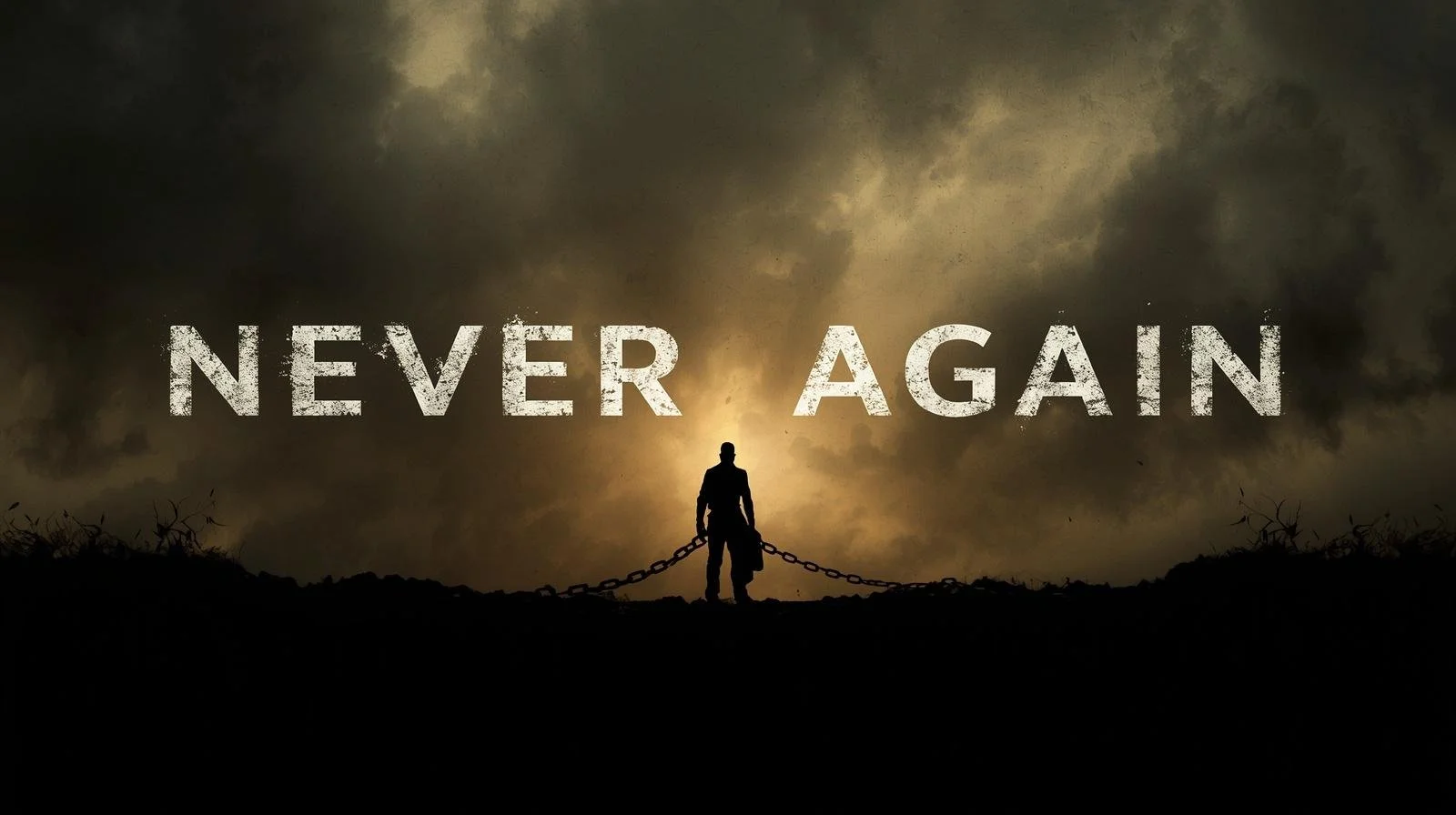
Promises Made in Pain
Words are powerful — especially the ones we declare to ourselves in the dark.
Inner vows are born in moments of pain. A child humiliated by a classmate makes a silent promise, “I will never let anyone see who I really am.” Heartbroken after their first love’s betrayal, a teenager vows, “I will never trust anyone again.” The youngest in a family of eight sees the chaos in the family and vows, “I will always be in control of my life.” These aren't casual thoughts. They are inner vows — heart declarations born out of pain, shaping the convictions that drive our choices.
On the surface, they look like wisdom. They feel like survival. But over time, these vows become the walls of a prison we built ourselves.
Vows are one powerful expression of our core convictions—those deep beliefs that quietly rule us from the inside out—and in my article Core Convictions: How You Answer These 6 Questions Will Change How You Live Your Life, I unpack six key questions that surface those convictions and show how they shape the way we see God, ourselves, and others.
How Vows Work Against Us
Inner vows function as rigid self-defense mechanisms. They operate on the logic that if we control enough, hide enough, or stay guarded enough, we can guarantee we'll never be wounded in the same way again. The problem is that when we make an always or never vow, we no longer have freedom. We are living with walls up that chain us to a choice we made long ago in our pain. It does not give opportunity for God to bring something new into our lives. It takes away the discernment that comes with the Spirit. Our vows are forged in unsafe circumstances and make sense at the time. But they continue to be at work long after our circumstances have changed.
In the past, saying “no” made me feel guilty so I vow, “I will never say no again.”
In the past, showing my feelings meant that I lost someone I loved so I vow, “I will never show my full feelings again.”
In the past I let someone I care about down, so I vow, “I will always be the one people can count on”
What could go wrong?
I will never say no again or I will always please others: I start overriding my own needs, saying “yes” when I’m exhausted or overwhelmed, which leads to burnout and resentment. My “yes” stops being honest, and unhealthy or manipulative people are the ones who benefit most from my lack of boundaries. Over time, I lose a clear sense of myself, and the original guilt over saying “no” is replaced with a deeper guilt and frustration over feeling used and inauthentic.
I will never show my full feelings again: I start hiding my true emotions, only showing what feels “safe,” which leaves me feeling unseen and misunderstood. My relationships become shallow, because people can’t connect with what I’m really feeling inside. Over time, my fear of losing someone ends up costing me the very intimacy and closeness my heart was made for.
I will always be the one people can count on: I start taking responsibility for everyone, saying “yes” even when I’m tired, hurting, or already stretched too thin. I feel like I’m not allowed to fail, rest, or have needs of my own, because I always have to be the strong one. Over time, the pressure to be the one people can count on leaves me exhausted, resentful, and afraid that if I ever drop the ball, I’ll lose the love and acceptance I long for. The people closest to me get left behind as I say “yes” to others instead of them.
Inner vows imprison us behind the hurts of our past. We don't respond to the person in front of us; we respond to the person who hurt us years ago. We don't assess new situations on their own terms; we run every experience through the filter of an old wound.
Consider P.T. Barnum in The Greatest Showman. As a poor boy humiliated by the class divide, he vows, “I’ll never be the stable boy again.” That vow quietly steers his entire life. He gains what he thinks he needs—fame, money, acclaim—but when his father‑in‑law publicly shames him, the house of cards comes tumbling down. Because his identity is rooted in proving he’s “not the stable boy,” he gambles his marriage, his home and his community for one more chance to prove he is not a nobody.
Avoiding The Pain Is Avoiding The Healing
The cruel irony of inner vows is that the barrier that keeps out pain also keeps out healing. The wall meant to stop the hurt also keeps that part of us from ever being touched. Neuroscience shows that you cannot change a part of the brain that never gets activated.
Imagine trying to get good at archery or a foreign language without ever engaging that part of your mind. In the same way, if we never turn toward these inner vows, they keep operating in the background, quietly steering our reactions, relationships, and sense of self. We can go our whole lives with these silent promises in charge—or we can, with courage, choose to face them.
It takes courage to feel through and process past hurts and allow God to move in our hearts. If we do not do this work, parts of our hearts will remain shut off from God and others. They are “safe” behind their walls, but they are also dying in isolation. As C.S. Lewis put it, “To love at all is to be vulnerable… Lock it up safe in the casket or coffin of your selfishness… it will not be broken; it will become unbreakable, impenetrable, irredeemable.”

Freedom From Inner Vows: A Path Forward
Freedom from inner vows doesn't happen accidentally. It requires intentional, (inspired by Elijah House Prayer Ministry) Spirit-led steps:
Identification — Ask the Holy Spirit to surface the specific vow. When did I make this agreement? What pain was I trying to prevent? He is faithful to show you.
Renunciation & Repentance — Formally renounce the vow in prayer, recognizing it for what it is: a sinful attempt to rely on human strength rather than God's protection and provision.
Forgiveness — Release bitterness toward those whose actions prompted the vow. You cannot fully break a vow while still bound to the wound that created it.
Breaking the Vow — Speak it aloud in prayer: "By the power and authority of Jesus, I break this vow." What was declared can be un-declared.
But breaking a vow only clears the wall. Something must fill the space it leaves behind. And this is where the story becomes remarkable — because while we have been busy tearing down old declarations, God has already been writing new ones over us.
Think about what inner vows really are at their core: they are a declaration of self-governance. I will protect myself. I will manage this. I will make sure I am never hurt again. They are the soul saying, I'll handle it alone. But when we break those vows and allow Christ in, we are not just releasing a coping mechanism — we are surrendering our hearts.
Ezekiel 36:26 says, “…I will give you a new heart and put a new spirit in you; I will remove from you your heart of stone and give you a heart of flesh,” and when we open those guarded places to God, we give those very parts of us a real chance to be healed.
Reflection: Walking This Out With God
Sit with this for a moment: where have you quietly said, Never again or Always over your own heart? Maybe it was, I will never let anyone see who I really am. Maybe it was, I will never trust anyone again. Maybe it was, I will always be in control. These vows may have felt like your only option at the time. They were your best attempt to survive.
Let this reflection guide you gently through the four steps:
Identification
Ask the Holy Spirit: Lord, is there an inner vow I’ve made? When did I first say this? What pain was I trying to prevent? Notice any memory, phrase, or feeling that surfaces. Simply name it before Him.Renunciation & Repentance
When a specific vow comes to mind, bring it into the light:
“Jesus, I confess that I made the vow, ‘I will _______.’ I’ve been relying on my own strength and self‑protection instead of Yours. I turn from this vow and give it to You.”Forgiveness
Ask: Whose actions led me to make this vow? When a face or name comes, pray:
“Jesus, I choose to forgive ______ for ______. I release them to You. I refuse to let this wound govern my heart any longer.”Breaking the Vow
Finally, agree with His authority:
“By the power and authority of Jesus, I break this vow: ‘I will _______.’ What I declared in pain, I now un‑declare in Your name.”
Then, pause and listen. Ask Him, “Jesus, what do You declare over me instead?” Let Him begin to replace your promises made in pain with His words of life.
✦ The Core Convictions Series
This article is part of the Core Convictions series: six questions that reveal how our beliefs shape the way we live.
What story am I living in?
What commitments have I made: Inner Vows and Declarations?
What core beliefs do I have about myself, God, and others?
What judgments have I formed?
What habits and assumptions shape me?
What do I trust to define reality?
Read the full series here.
If, as you read this, you recognize places where you feel stuck and would like someone to walk with you in the healing process, Growth Counseling offers professional Christian counseling that weaves together the timeless truths of Scripture and the proven tools of therapy. Whether you are navigating anxiety, depression, trauma, relationship strain, or long‑standing patterns like the inner vows described here, our counselors provide a safe, faith‑filled space—online across Pennsylvania—to process your story and grow in wholeness with Christ. You can learn more or schedule an appointment at growthcounseling.org.
Sources
C.S. Lewis, The Four Loves (1960). Quoted in “There Is No Safe Investment. To Love at All Is to Be Vulnerable.”
Elijah House Ministries, “What Is an Inner Vow? (And How to Get Rid of It),” Elijah House USA Blog, April 15, 2023.
“Healing the Wounds – Bitter Root Judgments & Inner Vows,” Elijah House teaching handout (PDF).
Simply Psychology, “Brain Plasticity in Psychology | Neuroplasticity,” August 16, 2023.
Verywell Mind, “How Neuroplasticity Works,” accessed 2024.